
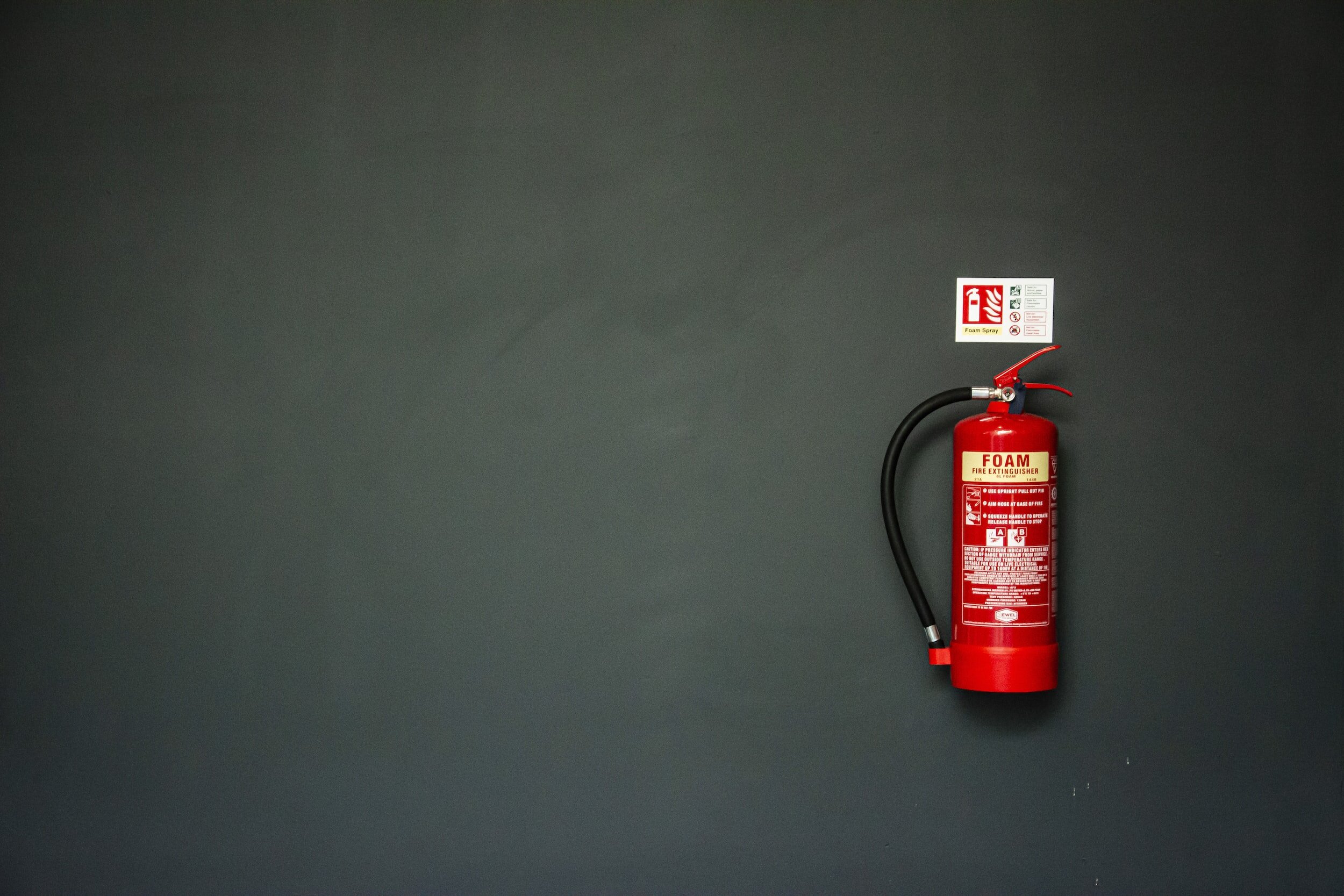
FIRE EXTINGUISHERS
Making sure you have the right type of extinguisher and that it’s properly stored and inspected at least once a year will be a life-saving precaution in the event of a fire.
Extinguishers installed in locations where they’re more prone to rust, impact, or tampering should be inspected more often.
Do you have the right fire extinguisher?
| Type | Class | Location | ||
|---|---|---|---|---|
| ABC Dry Chemical | A B C | General building protections, offices, retail stores, warehouses, wood working shops, boats | ||
| BC Dry Agent | B C | Fuel storage, oil-based paint storage, paint spray booths, auto repair shops, aviation tugs, fueling carts | ||
| Clean Agent | A B C | Computer server rooms, telecommunication, manufacturing facilities, aviation flight lines, maintenance facilities, offices | ||
| Class K Wet Chemical | A K | Restaurant kitchens, cafeterias, food trucks | ||
| Water | A | Office buildings, auditoriums, convention halls, oxidizer storage, pool chemical storage | ||
| Water Mist | A C | Hospitals, museums, libraries, telecommunications, computer rooms, server rooms, clean rooms | ||
| Foam | A B | Fuel storage, oil-based paint storage, dip tanks | ||
| Carbon Dioxide | B C | Welding shops, auto repair shops, manufacturing facilities | ||
| Class D Dry Powder | D | Machine shops, foundries, metal fabrication shops, heavy industries |
Fire Classifications
| A | B | C | D | K | ||||
|---|---|---|---|---|---|---|---|---|
| Ordinary Combustibles | Flammable Liquids & Gases | Live Electrical Equipment | Combustible Metals | Cooking Equipment | ||||
| wood, paper, rubber, fabrics, plastics | gasoline, oils, paint, lacquer, tar, grease | computers, servers, monitors, appliances, transformers | magnesium, titanium, sodium, lithium, potassium | cooking oils, fats, commercial cooking appliances |
Fire Extinguisher Services
Annual Certification
New Extinguishers
Replacement
Exchange
Cabinets & Mounting Brackets
Visual Inspection:
Mechanical parts of the fire extinguisher
Extinguishing Agent
Expelling Means
Physical Condition
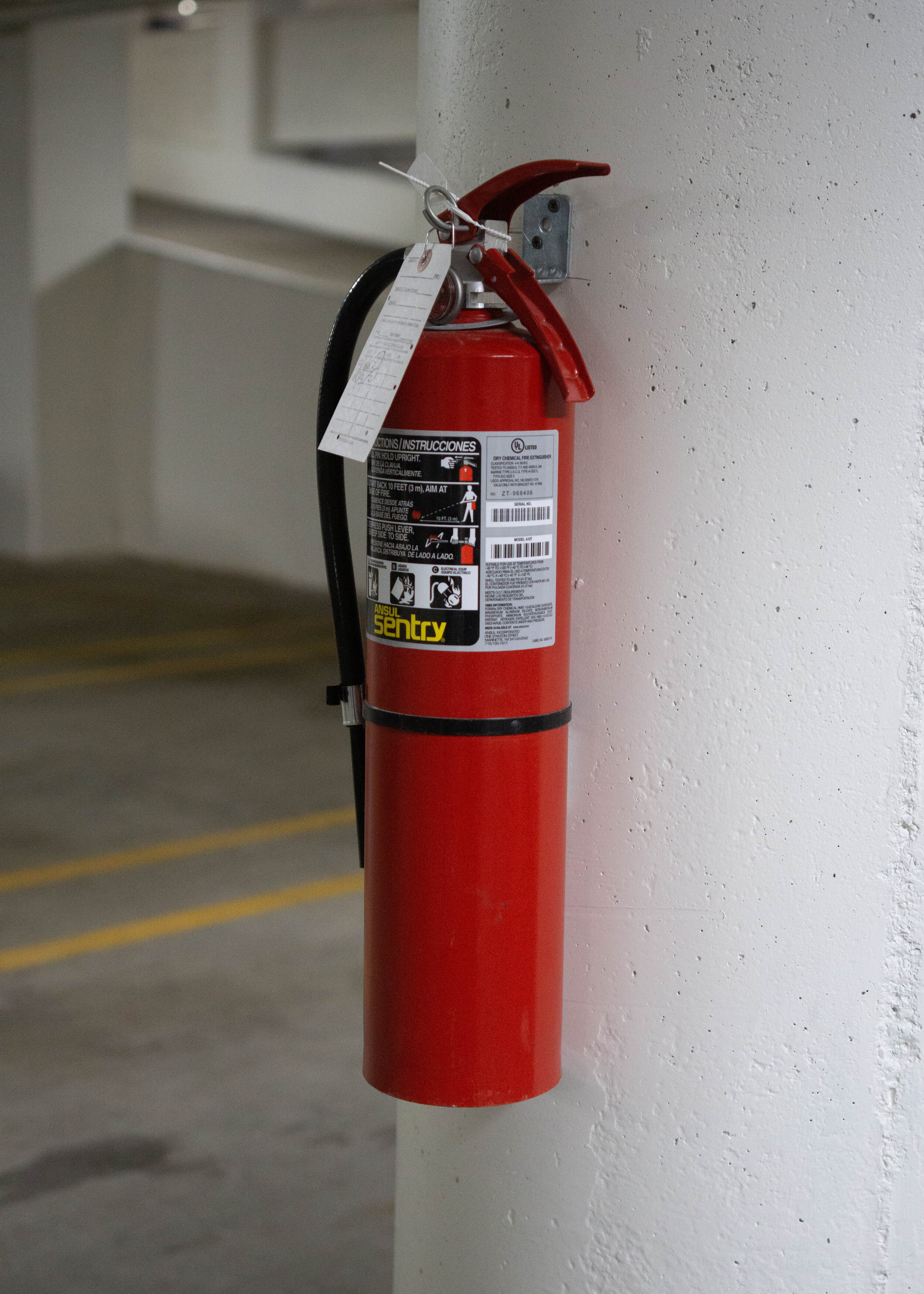
At Red Hawk Fire Protection, We provide high quality fire extinguisher cabinets and mounting brackets. Placement of your fire extinguisher is important, it needs to be readily accessible in the event of a fire. Different mounting brackets will be required for different locations that the fire extinguisher will be installed (wood, metal, concrete).
Our highly-experienced technician will install your extinguisher with the appropriate cabinet or mounting brackets, ensuring you have easy access in the event of an emergency and preventing damage or theft to the extinguisher.

OSHA Requirements
Employers must mount, secure, and identify fire extinguishers in an area conspicuous to employees.
Use only OSHA-approved fire extinguishers.
Must inspect, test, and maintain fire extinguishers.
Employer-Provided fire extinguishers must be appropriately classified for the kinds of fires that could occur in each specific work environment.
Contact us for your free quote today!
FAQs
-
Fire extinguishers provide a fast first response to small fires before they have a chance to spread throughout a property. Having properly maintained extinguishers readily available can help protect people, reduce property damage, and improve overall fire safety preparedness.
-
Fire extinguishers should be visually inspected regularly and professionally serviced according to NFPA and local fire code requirements. Routine inspections help ensure the extinguisher is fully charged, accessible, and ready to operate during an emergency.
-
Different fire extinguishers are designed for different types of fires, including ordinary combustibles, electrical fires, flammable liquids, and kitchen grease fires. A professional fire protection company can help determine the correct extinguisher types for your home, office, warehouse, or commercial facility.
-
IteYes, fire extinguishers can lose pressure, become damaged, or require replacement over time. Regular maintenance and testing help identify extinguishers that need recharging, repairs, or replacement to maintain compliance and reliability.
-
Fire extinguishers should be placed in visible, easily accessible areas throughout the property where fire risks may exist. Common locations include kitchens, garages, mechanical rooms, offices, warehouses, and near exits or high-risk equipment.
-
During an inspection, trained technicians check the extinguisher’s pressure levels, condition, accessibility, and compliance with current fire safety standards. The inspection also helps verify that extinguishers have not been damaged, discharged, or obstructed from view.
-
Many fire extinguishers can be recharged after they have been partially or fully discharged. A certified fire protection professional can inspect the unit and determine whether it can safely be recharged or if replacement is recommended.
-
Yes, most commercial buildings are required to have properly placed and maintained fire extinguishers to comply with local fire codes and OSHA regulations. The number, type, and placement of extinguishers depend on the building size, occupancy type, and fire hazards present.
-
The correct fire extinguisher depends on the specific fire risks associated with your property or business operations. Fire protection professionals can evaluate your building and recommend the proper extinguisher classifications and placement for maximum safety and code compliance.